
From “Wile E Coyote and the Road Runner”

From Asteroid City
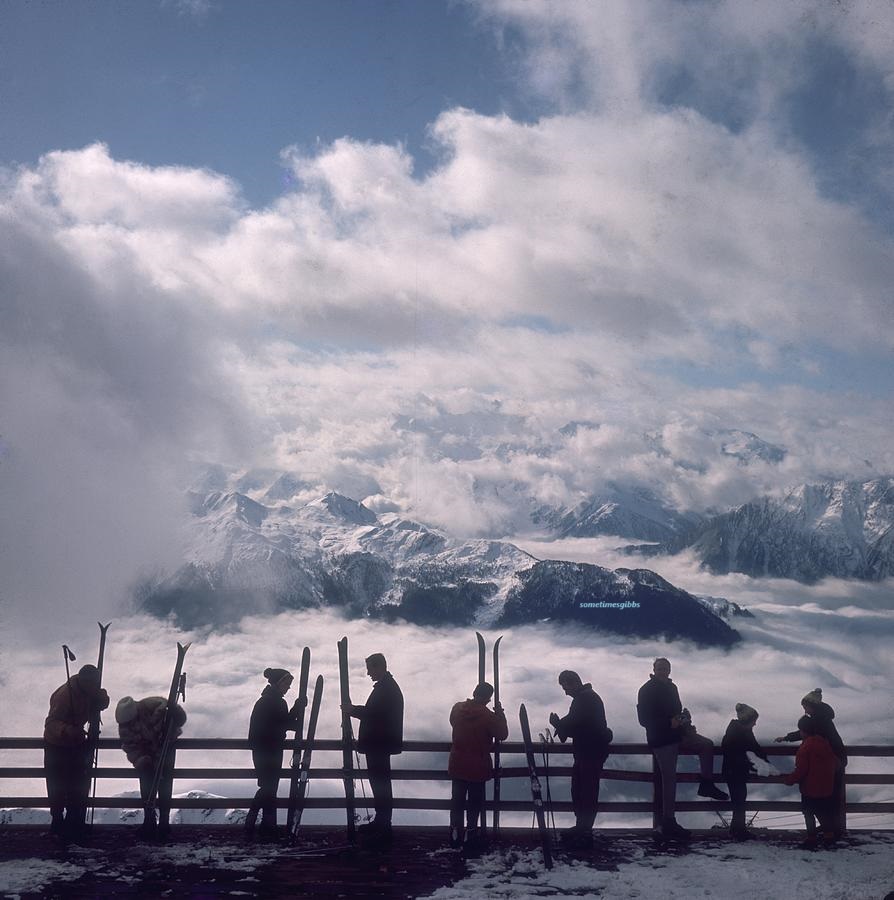
Teach me to care and not to care.
From “Wile E Coyote and the Road Runner”
From Asteroid City
“Perhaps my objection to “teaching to your top third” is most clearly expressed in my objection to the idea a pastor should “preach to his top third.” I’ve never heard anyone put forward that idea before, of course, but I imagine most pastors would scoff if they heard it. “Preach to your top third? What sort of a thing do you take preaching to be if you believe there is a top third? And what do you expect your top third to do with this preaching that is tailored to them? Write better commentaries on Hebrews? Is that what pious old Mrs. Whitlock is going to do with your sermons?” On the other hand, a good sermon about the Beatitudes is going to hit your most pious congregants between the eyes—and your least pious congregants, too.”
-from my latest for CiRCE
You have a right hand and a left hand. There is a right half and left half of any object. Can you define right and left in a non-relative way? Can you define left without using an example and without gesturing at an object to explain?
If you cannot, why not?
“There are times when Milton seems to humanize Satan, but this is really an optical illusion. In fact, Milton is zealous to prove that sin is the satanification of man. God stamps His image on man, and Satan longs to do the same.”
-from the forthcoming “How to Teach Paradise Lost“
Next year I will teach two classes through Gibbs Classical: Plato’s Republic for Beginners in the fall and Foundations of Modern Politics in the spring.
On several occasions, I have spoken of a brief period in my life wherein I considered myself quite liberal. This was sixteen or seventeen years ago now, shortly after I got married. I was, like most people in their 20s, rethinking everything, and at the time, the progressive conception of human nature simply seemed more compelling to me. It was also around this time that I read and taught Plato’s Republic and Edmund Burke’s Reflections on the Revolution for the first time and I couldn’t help but noticing a remarkable connection between the two. Plato’s defense of an aristocracy and Burke’s explanation of an aristocracy were entirely compatible. They were both based on common sense, observation, and “the way things are.” At the same time, Burke’s conservative presentation of human nature struck me as far more mystical, far more transcendent, and thus far more satisfying than the progressive understanding of human nature as an endlessly manipulatable substance. Burke believed that a human being was a very particular kind of thing and that happiness was the result of working within particular limits. His promises were not as grand as progressives, but they were real. What Burke did for my conception of political man, Plato did for my conception of spiritual man. The Republic is a remarkably lucid argument for how a man ought to curate his soul, govern his soul, bless his soul, and converse with this soul. It’s a handbook on self-control, the same sort of self-control which enables a city or a nation to thrive. Many of the arguments I have made about good taste in the last several years began with reading Plato’s Republic, and I am quite happy to offer a fourteen week class devoted to a slow and patient read of this book. You can read more about that class and register here.
This is the third time I am offering Foundations of Modern Politics, and the class evolves just a little every time I teach it. My desire to offer the class was initially prompted by the movement to defund the police. So many of the arguments I read in favor of defunding the police were based on shallow, faulty progressive arguments about human nature, and yet I consistently found that conservatives were completely unequipped to offer reasonable replies. “We need to spend our police money on the problems that police solve. If people weren’t desperate and hungry, we wouldn’t need the police,” certainly has a gloss of common sense, but it doesn’t hold up to a little scrutiny. Nonetheless, Foundations of Modern Politics was a class that took students back to the beginning of the argument between progressives and conservatives. It explained the philosophical prejudices behind progressive beliefs about society and the individual, as well as the conservative philosophies of time and nature.
Foundations of Modern Politics returns next spring for the 2024 election year, when America will go mad for a little while and give itself over to irrational assertions, unverified confidences, and unfulfillable promises. If you would like to escape the deluge of our political passions and return to the source of the argument, consider enrolling. Don’t spend 2024 shouting at your television. Spend it soberly shaking your head.
If you missed it in 2022, you can now purchase recordings of last year’s Gibbs Classical Online Summer Conference right here. Those who purchase the recordings get links to downloadable videos of all eight lectures, three Q&A sessions, as well as a 62,000 word PDF containing the full text of each lecture. Additionally, audio-only versions of the lectures are available to download for those who want to listen while they’re in the car.
“The Veritas awards ceremony is only one hour long, students dress in their formal uniforms, and it is the very last thing which happens in the school year. When I say “the very last thing,” I mean the academic dean prays at the end of the awards ceremony and then says, “Alright, have a great summer!” After that, there’s no lockers to clean, no textbooks to return, no nothing. There’s a loud cheer and everyone adjourns to the quad to say their goodbyes. In this, our awards ceremony banks on the importance which every real beginning and every real end has. Almost all holy days (Christian, pagan, secular) mark the beginning of something or the end of it. When an awards ceremony is the actual factual last thing which happens in the school year, everything which happens during the ceremony has greater heft. The ceremony is the formal operation by which the year is closed out. When the ceremony is held with three days of school left, the actual end of the year is anticlimactic. Students depart a math exam one by one, mill around the hallway a moment, say, “I guess that’s it,” and then walk home or wait to get picked up. The school year really ought to end on a moment where everyone assembled together. It ought to end with honor given, honor received, prayer, and joy.”
-my latest for CiRCE

 There are still faint glimmers of civilization left in this barbaric slaughterhouse that was once known as humanity.