Lecture: How Should Christians Watch Movies?

On the evening of Thursday, April 22nd, at 8:00pm EST, I will give a lecture entitled “How Should Christians Watch Movies?” The lecture will include readings from Love What Lasts, my forthcoming book from The CiRCE Institute. As per usual, the lecture will not be recorded.

While there is a good deal of conversation among Christians about how to watch movies, the two most prominent viewing strategies of the last twenty-five years are worldview analysis and what I refer to as the sympathist position, which often goes hand-in-hand with “cultural engagement.” While I think both of these strategies have some merit, I do not believe either is all that classically minded. Instead, I offer a third way which is neither novel nor innovative, and yet is not a viewing strategy I have hear anyone else put forward. It is not grounded in philosophy, but common sense.  

If you would like to attend the lecture, please register for the GibbsClassical.com mailing list.


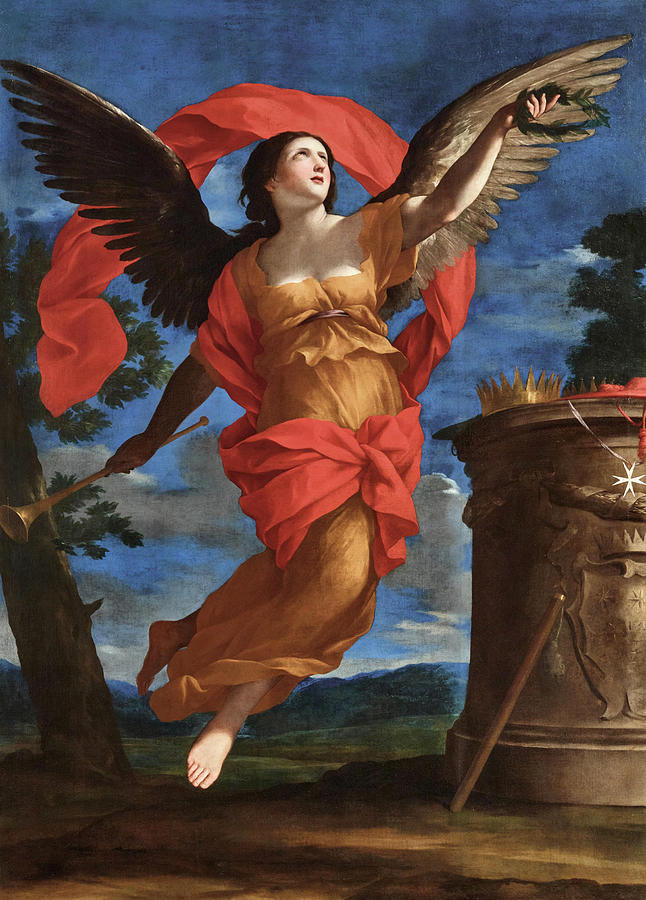
Allegory of Fame

I first encountered Giovanni Romanelli’s Allegory of Fame a few months ago at the Chrysler Museum.

If I put a large framed poster of this on the wall of my living room, such that I saw it every morning while having my coffee and every night while eating my dinner, I think I would work harder, produce more, and waste less time.

The Space Race

Thirty years ago, the most readily identifiable icon of the space race was Neil Armstrong, a reserved and dignified man who observed a brief communion service with Buzz Aldrin while they were on the moon.

Today, the most readily identifiable icon of the space race is Elon Musk, who named his child “X AE A-XII” and got high on the Joe Rogan Experience.

The comparison reveals quite a bit about “science.” Not real science, I suppose, but the sort of thing which passes for science in the news cycle, White House press briefings, NPR’s Science Friday, TED talks, Bill Nye’s Instagram account, and the sort of classrooms where “Science is fun!”

How To Not Be Shallow

“You are not too young to begin paying close attention to the world, to others, and to begin asking yourself, ‘What do joyous people have in common?’

You are not too young to pay attention to the words and deeds of your friends and ask what sort of adults they will become if they continue down their current paths.

You are not too young to pay attention to the pious adults in your life and ask how they got there, how they became pious.

And neither are you too young to look at miserable adults and ask how they became miserable.

As an adult who is nearly 40 years old, and as an adult who has been teaching high school for sixteen years, I will say that very few of the miserable adults I know became miserable because their grades in school weren’t good enough. Rather, most of the adults I know who are miserable, whether they are “saved” in the common evangelical sense of the word, or Baptist, or Presbyterian, or Catholic, or Orthodox, are miserable because they never learned profundity of spirit. In short, they are miserable because they are shallow.”

-from a lecture I am giving to Orthodox youth this weekend at The Saint Emmelia Orthodox Christian Homeschooling Conference