
The man who often looks at his hands appears thoughtful, whereas the man who often looks at his fingers appears moronic.
A Thousand Ways To Do This
“Hey, cool tattoo! Is that Kermit the Frog?”
“What? It’s Satan. From Dore’s illustrations of Paradise Lost. See how the–“
“Neat, hey, that’s cool too.”
A High School Boy Explains Why He Keeps Untucking His Uniform Shirt
“No doubt, you people have wondered why it’s necessary to tell me eight or nine times a week, ‘Trent, tuck in your shirt.’ You must complain about it in the breakroom. One of you probably says something like, ‘I had to remind Trent to tuck in his shirt again today,’ and then someone else says, ‘So did I,’ and a third says, ‘Me, too!’ You probably stand around shaking your heads, wondering how anyone can need so many reminders to tuck in his shirt. It’s baffling, isn’t it? Well, I’d like to tell you why I need so many reminders. I probably shouldn’t do this, and it’s probably a betrayal of my own kind to do it, but I’m going to tell you why you have to keep reminding me to tuck in my shirt. It’s because you morons never really do anything about it.”
-from my latest for CiRCE
Ethics In Fiction
The standards we keep for fictional heroes are kept quite separate from the standards we hold for real people. For example, in The Two Towers, Gandalf refers to Grima as “Wormtongue,” even though “Wormtongue” is an abusive nickname assigned to Grima by all the people in Theoden’s court. While most Christian readers take deep satisfaction in the scene wherein Gandalf finally puts down Wormtongue and delivers Theoden from his evil influence, there’s no escaping the fact that Gandalf has no interest in conciliating words, his confrontation of Grima doesn’t satisfy Matthew 18 standards, and he speaks to Grima in a disrespectful and accusatory manner–because Grima’s actions warrant such treatment.
I’m not sure the modern Christian has a framework for defending Gandalf’s approach to conflict resolution.
Why Things Aren’t Very Good Right Now
Most Christians honestly believe that it is sinfully inappropriate, highly offensive, and worthy of full cancellation for one Christian man to say to another, “Grow a pair,” even if the man hearing these words is weak, cowardly, and his incompetence is bringing many, many other decent men to suffer.
Nonetheless, there has never been an age wherein this piece of advice was more necessary.
Proverbs For A Sentimental Age
Foolishness is bound up in the heart of a child, but friendly reminders will drive it away.
Against Servant Leadership
“While I am all in favor of serving others, the expression “servant leadership” is passive-aggressive virtue signaling which coyly suggests there’s something broken in the classic understanding of “leadership” that can be fixed with the help of egalitarian philosophy and LinkedIn business jargon. Imagine asking a fellow in his twenties if he was married and hearing, “I’m a servant husband to my wife.” Are you a father? “I’m a servant father.” What position do you play on the basketball team? “I’m a servant point guard.” Don’t you work at Subway? “I’m a servant sandwich artist.” Well! I’ll just assume you have a gripe against the point guard, the father, and the husband as these concepts have been historically known—though I don’t know that “sandwich artist” is old enough to have a history.
Of course, the term “leadership” isn’t that old either. As Clifford Humphrey noted last year in a brilliant and delightfully bristling piece for The American Mind, “Before the twentieth century, the word leadership almost never appeared in print. Before the 1990s, very few leadership development programs existed. Today… ‘leadership development’ is a $366 billion global industry.” I think it’s a fair rule of thumb that anything which alleges to be a) spiritually important and b) to have gone from 0 to $366b in less than a generation is c) a complete hoax destined to fail soon, but I don’t expect everyone to take a classical perspective on such matters. Humphrey argues that what is now called “leadership” was formerly known as “statesmanship,” but “statesmanship” is inherently rooted in hierarchies and modern people despise hierarchies.
The way Humphrey describes “leadership” in the corporate world and the way Christians describe “servant leadership” are basically interchangeable. Nearly everything else in contemporary Christian culture is modeled after the world, so why not our approach to the workplace? Both “leadership” and “servant leadership” are about community, diversity, equality/our equality in Christ, building others up/the growth of others, and so on. There’s absolutely nothing about “servant leadership” that’s going to intimidate the guy in a Patagonia vest doing a thoroughly secular “leadership development” session for the Whole Foods HQ.”
-from my latest for CiRCE
Water In Turmoil After It Is Accused of Wet Bias

The Pen Tom Steals From Dickie In The First Episode
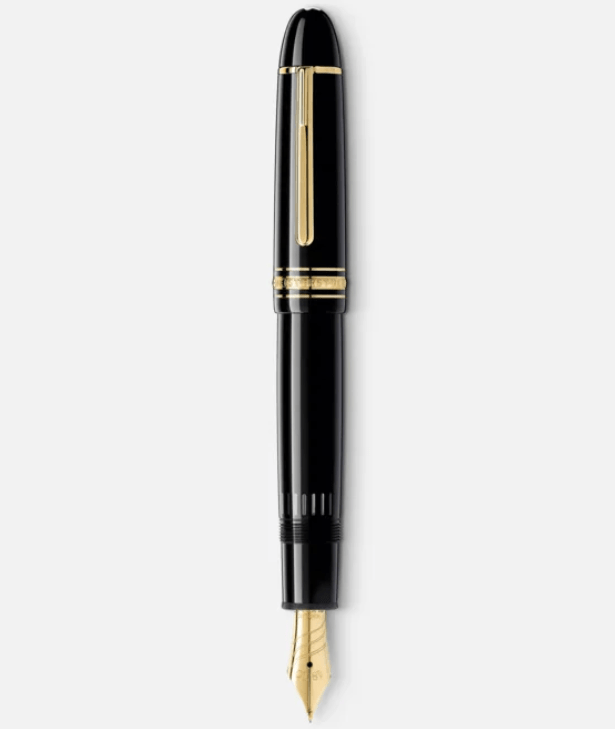
The MEISTERSTÜCK 149 from Montblanc. If you’d like to buy me one for Christmas, here’s the link.
“Will Heaven Be Boring?” Is Now Available
“Will Heaven Be Boring? A Conversation About Beauty And Good Taste” is available for purchase on Amazon now.
 There are still faint glimmers of civilization left in this barbaric slaughterhouse that was once known as humanity.