
The family in Bar Harbor, about three minutes from a downpour.

Teach me to care and not to care.
The family in Bar Harbor, about three minutes from a downpour.
“Because we are all crypto-Marxists, we think it best to lay out our Humanities curriculum chronologically, as though books from the sixteenth century have more in common than British books (common by place), Catholic books (common by dogma), or philosophy books (common by discipline) from different centuries. The idea that time dominates all other themes is born of a progressive view of history.”
“Look, I am not saying the man is perfect, I just get very angry whenever anyone talks about any of his faults.”
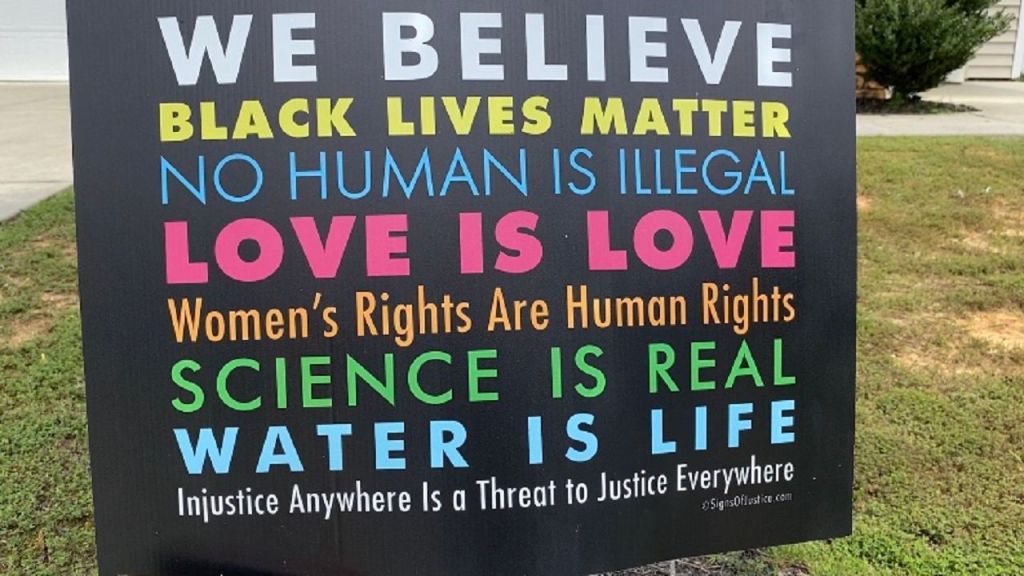
Tom: Hey, wanted to ask you a question about your sign.
Harry: We’re very passionate about social justice.
Tom: Sure. I just wanted to know what “WATER IS LIFE” means?
Harry: Huh?
Tom: Your sign says you believe “WATER IS LIFE.” I don’t get it.
Harry: Oh, right. Well… I have to admit, I’m not too clear on what that one means.
Tom: Do you think it just means that unless you drink some water from time to time, you die?
Harry: That thought has crossed my mind, but if that’s the case, I don’t get the angle. Because without air and food, you’re going to die, too.
Tom: Yeah, absolutely…
Harry: In all the other claims on the sign, I get the reference. You’ve got your race thing, your immigration thing, your gay thing, your feminist thing, your evolution thing. But… is a there a water thing?
Tom: Not that I’m aware of.
Harry: If there is, the water people need to get to work, you know what I’m saying?
Tom: It’s a fair point. I mean, if you’re going to justify your place on the sign, it seems like you better get off your duff and… I don’t know.
Harry: Burn a city bus?
Tom: Well, it’d be a good start.
Harry: You burn a city bus, people are going to need some water to put it out. Seems like you’d make your point pretty clear.
Tom: Have you seen Dead Poets Society?
Harry: No.
Tom: It’s so good. There’s one scene where this teacher actually stands on a desk during class. He gets his students so pumped.
Harry: No way!
Tom: I know, right?
Harry: Man, I wish one of my teachers had stood on a desk during class.
Tom: I’m thinking of becoming a teacher just so I can stand on a desk. I just think of all the students who would become pumped if they saw me, a teacher, stand on a desk.
Morgan Freeman (Narrator): Tom did become a teacher. He never stood on a desk, but it wouldn’t have helped. He still would have been a terrible teacher.
“While the most ready icons of a classical education may be Aristotle and Homer, I genuinely believe that the most classical pedagogy that can be found in a classical school is found in the elementary school classroom, not the high school classroom.”
-from my latest for CiRCE
What is worse than a dull church? A church which is not dull enough. If a church is not a little dull, it will only last a little while. Dull churches do not die. Exciting churches die rather quickly.
“If you’ve ever walked into a classroom and it looked like the students weren’t doing anything, there is a good chance they were working on a group project.”
“A little girl with a good imagination can make one cheap, stuffed doll do all the things that a dull-witted girl needs an army of expensive, mechanical dolls to accomplish. A mechanical doll will say, “Play with me,” and suck its thumb. A cheap, stuffed doll will deliver Pericles’ funeral oration while cooking pretend chicken Provençal for seven stuffed guests.”
-from one of a dozen lectures I’m giving this summer

You’d think that people would catch on to the fact that churches with night club names (“Dwell,” “Lift,” “Sponge”), pastors in jeans, and killer Instagram accounts go hand-in-hand with news stories like this one.
If you want a church that’s not going to get hit with corruption charges, you want a place with a name like “St. Thomas Lutheran” or “Second Baptist.” These tend to be churches that have had 80 members for the last 80 years, do not talk about changing the world or “engaging the culture,” do not have in-house graphic design teams, do not have social media accounts, and do not die.
“Dwell,” though? If you go to a church called “Dwell,” you’re asking to be interviewed on a sad podcast nine years from now.

