Starting A Classical School? Here’s Five Things You Have To Get Right The First Time

“Every year, classical Christian schools open by the dozen. Many start with fewer than forty students, but it is not unusual to see a classical school go from forty students to one hundred in less than a decade, and that decade goes fast. Despite how common such growth is, many schools are not founded on practices and ideals which will serve the student body well once it triples or quadruples in size. Granted, there are certain issues a school can figure out as it goes. The student handbook doesn’t have to be perfect on day one. However, there are certain issues which a new school ought to have sorted out once and for all before they even open their doors.”

-from my latest for CiRCE

Cells. Interlinked.

There are Twitter accounts of mid-level Christian intellectuals I check in on occasionally so I remember what it looks like to be a functional intellectual who isn’t a slave to followers and fame.

There are Twitter accounts of mid-level Christian intellectuals I check in on occasionally so I remember what it looks like to be a non-functional intellectual who is trying to amass followers and fame.

Wisdom Literature for Beginners Starts This Friday

Registration is still open for Wisdom Literature for Beginners, the Spring class I am offering through Gibbs Classical. The reading schedule is very light and the lectures will be dense and focused. Here is our schedule:

January 13: The Consolation of Philosophy (Book 1) 

January 20: Ecclesiastes, Chapter 1

January 27: Consolation (Book 1), Ecclesiastes 2

February 3: Consolation (Book 1) 

February 10: Ecclesiastes 3

February 17: Consolation (Book 1), Ecclesiastes 4

February 24: Consolation (Book 2), Ecclesiastes 5

March 3: Consolation (Book 2), Ecclesiastes 6

March 10: Consolation (Book 2), Ecclesiastes 7

March 17: Consolation (Book 3), Ecclesiastes 8

March 24: Consolation (Book 3), Ecclesiastes 9

March 31: Consolation (Book 3), Ecclesiastes 10

April 7: Consolation (Book 4), Ecclesiastes 11

April 14: Consolation (Book 4), Ecclesiastes 12

April 21: Consolation (Book 4 and 5)

April 28: Consolation (Book 5)

The class is available on the Student Level and the Auditor Level. You can read more about the class or register here.

First Good Book I Read This Year

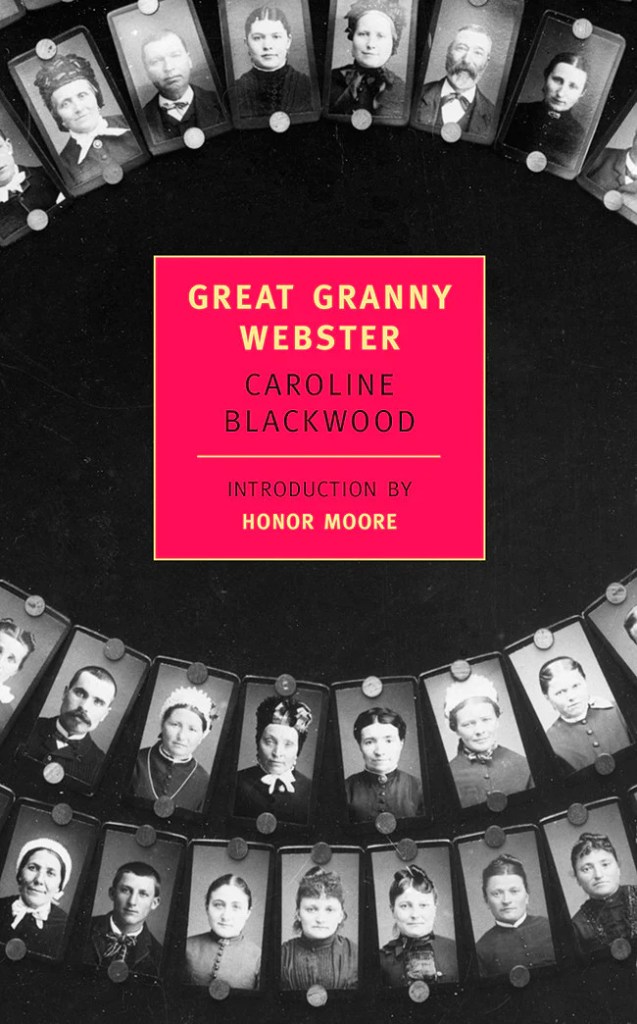
This is really quite short, but delightful, albeit in a bleak, nihilistic sort of way. I only recently learned of Caroline Blackwood, but this title was good enough I plan on tracking down her other work. Given her upbringing, I get the sense this one is not exactly fictional. It’s more of a composite “like New York magazine does,” as per Stillman.

How To Keep Classical Christian Education From Falling Apart

“Imagine a league of eight or ten classical Christian schools forming in the future over a shared frustration that the “classical Christian” designation had come to mean so little. Suppose membership in this league were based on obedience to a number of cultural credos, like no smart phones or social media among students (or maybe even teachers), no video games, no sports program, and a deeper time commitment to fine arts than a school with a sports program can really imagine. The moment this league of schools got a six-figure donation, which wouldn’t take all that long, it would have little reason to maintain the “classical Christian” title.

For the sake of argument, let’s say that the classical Christian schools which decide to ban smart phones, social media, and forgo a sports program (and to spend all their sports time on dances, choral performances, art shows, the memorization of poetry, a robust and mandatory drama program) adopt the name “great tradition schools.” There is strength in numbers, of course, but in the beginning, only ten schools are founding members of The League of Great Tradition Schools. The League puts forward a short credo which acknowledges various debts to the classical Christian movement, outlines critiques of the movement, and puts forward a cultural program to be pursued in addition to Latin, rhetoric, Great Books, and so forth. This cultural program is viewed as having equal importance with academic studies and becomes the simple rubric by which prospective families are sorted. Over the first three years of its existence, the league goes from ten schools to twelve to fifteen. Then, in the same way various private Christian schools have “converted” to the classical model over the last twenty years, various classical Christian schools begin converting to what comes to be known as “the Great Tradition model.” Ditching basketball and soccer is no less a tough sell than taking on Latin, and the conversions are typically rocky and often fail. On the other hand, people are willing to move hundreds of miles to send their children to a Great Tradition school, just as they used to move hundreds of miles for classical Christian schools.

Over the following decade, Great Tradition schools begin soaking up all the families and teachers in classical Christian education that were most committed to old books, old aesthetics, and old morals. Consequently, classical Christian schools are able to more openly pursue programs of “cultural engagement,” “world-changing,” and “community” which their luddite co-laborers had held up for years. With those people gone, though, John Piper replaces Augustine, laptops debut in the classroom, Latin is replaced with Spanish “so that we can more easily accomplish the Great Commission,” and the JV pickleball team gets third in state. Classical Christian schools gradually become the school of choice for people who attend churches like The Mountain, The Drive, Wave, Disc, Glitter, The Holy Spirit Hole, Ruby Room, Jesus Vibe, Highland Spirit Club, and, of course, Sponge.TV Faith Café, whereas Great Tradition schools are populated by attendees of First Presbyterian and St. Prude Catholic. As opposed to connoting Plato and Augustine, the “classical” part of classical Christian education comes merely to mean an opposition to gay stuff, evolution, socialism, and critical race theory. Thoughtful people begin looking at classical Christian schools and asking, “In what sense is this really classical?” To be fair, though, there are people asking that question today.”

-from How To Keep The Classical Christian Movement From Falling Apart, my latest for CiRCE
My Favorite Christmas Prose

The Heavenly Christmas Tree

by Fyodor Dostoyevsky

I am a novelist, and I suppose I have made up this story. I write “I suppose,” though I know for a fact that I have made it up, but yet I keep fancying that it must have happened somewhere at some time, that it must have happened on Christmas Eve in some great town in a time of terrible frost.

I have a vision of a boy, a little boy, six years old or even younger. This boy woke up that morning in a cold damp cellar. He was dressed in a sort of little dressing-gown and was shivering with cold. There was a cloud of white steam from his breath, and sitting on a box in the corner, he blew the steam out of his mouth and amused himself in his dullness watching it float away. But he was terribly hungry. Several times that morning he went up to the plank bed where his sick mother was lying on a mattress as thin as a pancake, with some sort of bundle under her head for a pillow. How had she come here? She must have come with her boy from some other town and suddenly fallen ill. The landlady who let the “corners” had been taken two days before to the police station, the lodgers were out and about as the holiday was so near, and the only one left had been lying for the last twenty-four hours dead drunk, not having waited for Christmas. In another corner of the room a wretched old woman of eighty, who had once been a children’s nurse but was now left to die friendless, was moaning and groaning with rheumatism, scolding and grumbling at the boy so that he was afraid to go near her corner. He had got a drink of water in the outer room, but could not find a crust anywhere, and had been on the point of waking his mother a dozen times. He felt frightened at last in the darkness: it had long been dusk, but no light was kindled. Touching his mother’s face, he was surprised that she did not move at all and that she was as cold as the wall. “It is very cold here,” he thought. He stood a little, unconsciously letting his hands rest on the dead woman’s shoulders, then he breathed on his fingers to warm them, and then quietly fumbling for his cap on the bed, he went out of the cellar. He would have gone earlier, but was afraid of the big dog which had been howling all day at the neighbor’s door at the top of the stairs. But the dog was not there now, and he went out into the street.

Mercy on us, what a town! He had never seen anything like it before. In the town from which he had come, it was always such black darkness at night. There was one lamp for the whole street, the little, low-pitched, wooden houses were closed up with shutters, there was no one to be seen in the street after dusk, all the people shut themselves up in their houses, and there was nothing but the howling of packs of dogs, hundreds and thousands of them barking and howling all night. But there it was so warm and he was given food, while here—oh dear if he only had something to eat! And what a noise and rattle here, what light and what people, horses and carriages, and what a frost! The frozen steam hung in clouds over the horses, over their warmly breathing mouths; their hoofs clanged against the stones through the powdery snow, and everyone pushed so, and—oh, dear, how he longed for some morsel to eat, and how wretched he suddenly felt. A policeman walked by and turned away to avoid seeing the boy.

Here was another street—oh, what a wide one, here he would be run over for certain; how everyone was shouting, racing and driving along, and the light, the light! And what was this? A huge glass window, and through the window a tree reaching up to the ceiling; it was a fir tree, and on it were ever so many lights, gold papers and apples and little dolls and horses; and there were children clean and dressed in their best running about the room, laughing and playing and eating and drinking something. And then a little girl began dancing with one of the boys, what a pretty little girl! And he could hear the music through the window. The boy looked and wondered and laughed although his toes were aching with the cold and his fingers were red and stiff so that it hurt him to move them. And all at once the boy remembered how his toes and fingers hurt him, and began crying, and ran on, and again through another window-pane he saw another Christmas tree, and on a table cakes of all sorts—almond cakes, red cakes and yellow cakes, and three grand young ladies were sitting there, and they gave the cakes to anyone who went up to them, and the door kept opening, lots of gentlemen and ladies went in from the street. The boy crept up, suddenly opened the door and went in. Oh, how they shouted at him and waved him back! One lady went up to him hurriedly and slipped a kopeck into his hand, and with her own hands opened the door into the street for him! How frightened he was. And the kopeck rolled away and clinked upon the steps; he could not bend his red fingers to hold it tight. The boy ran away and went on, where he did not know. He was ready to cry again, but he was afraid, and ran on and on and blew his fingers. And he was miserable because he felt suddenly so lonely and terrified, and all at once, mercy on us! What was this again? People were standing in a crowd admiring. Behind a glass window there were three little dolls, dressed in red and green dresses, and exactly, exactly as though they were alive. One was a little old man sitting and playing a big violin, the two others were standing close by and playing little violins and nodding in time, and looking at one another, and their lips moved, they were speaking, actually speaking, only one couldn’t hear through the glass. And at first, the boy thought they were alive, and when he grasped that they were dolls he laughed. He had never seen such dolls before, and had no idea there were such dolls! And he wanted to cry, but he felt amused, amused by the dolls. All at once he fancied that some one caught at his smock behind: a wicked big boy was standing beside him and suddenly hit him on the head, snatched off his cap and tripped him up. The boy fell down on the ground, at once there was a shout, he was numb with fright, he jumped up and ran away. He ran, and not knowing where he was going, ran in at the gate of some one’s courtyard, and sat down behind a stack of wood: “They won’t find me here, besides it’s dark!”

He sat huddled up and was breathless from fright, and all at once, quite suddenly, he felt so happy: his hands and feet suddenly left off aching and grew so warm, as warm as though he were on a stove; then he shivered all over, then he gave a start, why, he must have been asleep. How nice to have a sleep here! “I’ll sit here a little and go and look at the dolls again,” said the boy, and smiled thinking of them. “Just as though they were alive!…” And suddenly he heard his mother singing over him. “Mammy, I am asleep; how nice it is to sleep here!”

“Come to my Christmas tree, little one,” a soft voice suddenly whispered over his head.

He thought that this was still his mother, but no, it was not she. Who it was calling him, he could not see, but someone bent over and embraced him in the darkness; and he stretched out his hands to him, and … and all at once—oh, what a bright light! Oh, what a Christmas tree! And yet it was not a fir tree, he had never seen a tree like that! Where was he now? Everything was bright and shining, and all around him were dolls; but no, they were not dolls, they were little boys and girls, only so bright and shining. They all came flying around him, they all kissed him, took him and carried him along with them, and he was flying himself, and he saw that his mother was looking at him and laughing joyfully. “Mammy, Mammy; oh, how nice it is here, Mammy!” And again he kissed the children and wanted to tell them at once of those dolls in the shop window. “Who are you, boys? Who are you, girls?” he asked, laughing and admiring them.

“This is Christ’s Christmas tree,” they answered. “Christ always has a Christmas tree on this day, for the little children who have no tree of their own….” And he found out that all these little boys and girls were children just like himself; that some had been frozen in the baskets in which they had as babies been laid on the doorsteps of well-to-do Petersburg people, others had been boarded out with Finnish women by the Foundling and had been suffocated, others had died at their starved mother’s breasts (in the Samara famine), others had died in the third-class railway carriages from the foul air; and yet they were all here, they were all like angels about Christ, and He was in the midst of them and held out His hands to them and blessed them and their sinful mothers…. And the mothers of these children stood on one side weeping; each one knew her boy or girl, and the children flew up to them and kissed them and wiped away their tears with their little hands, and begged them not to weep because they were so happy.

And down below in the morning, the porter found the little dead body of the frozen child on the wood stack; they sought out his mother too…. She had died before him. They met before the Lord God in heaven.

Why have I made up such a story, so out of keeping with an ordinary diary, and a writer’s above all? And I promised two stories dealing with real events! But that is just it, I keep fancying that all this may have happened really—that is, what took place in the cellar and on the wood stack; but as for Christ’s Christmas tree, I cannot tell you whether that could have happened or not.