The Connection Between Good Taste And Salvation

“One of the reasons American Christians have lost any real concern for beauty is because they do not know how to connect beauty with salvation, and so they believe there is no connection. This belief is entirely quixotic, though, because very few Christians have ever heard a real proposal about what the connection might be. Nonetheless, we are certain that any attempt at explaining the connection must either be snobbery or legalism. Salvation is exclusively to be understood as a divine-legal judgment and every honest court of law must be indifferent to beauty. In fact, a court aims to move beyond mere appearances and get to the truth. Besides, “Man looks on the outward appearance, but God looks on the heart,” “Beauty is only skin deep,” “You can’t judge a book by its cover,” and “Beauty is fleeting, but a woman who honors the Lord deserves to be praised.” So quit your pretentious whining about how bad Thomas Kinkade’s art is. Turn up that Kid Rock album and bust out the Yellowtail Shiraz. I like an ice cube with mine. Not refined, just forgiven.”

-the rest of my latest article for The Classical Teaching Institute is available here

How Do You Talk To High School Students?

“It’s my hope that A Parley with Youth will give parents a new perspective on the role that teachers can and should play for students, and that teachers also see this role as an agreeable possibility. Of all my accomplishments as a teacher, the one I’m most proud of is the significant number of former students with whom I remain in contact, some from the very beginning of my career. Students rightly determine that teachers who flatter them aren’t worth staying in touch with—it’s not the teachers who say, “So, I think there’s some interesting things going on in Drake’s ‘Hotline Bling,’ but tell me what you like about this song,” that students come back to see after they head off to college. When the temptations of the world fall heavy on nineteen-year-olds, and their own moral failures begin to accrue interest, it’s the teachers who told them, “Drake sucks, man,” that students return to for advice.”

-my latest for CiRCE is about A Parley with Youth, my latest book

Why I Love Watching The Olympics

“While the lines of competition are drawn between nations, watching the Olympic Games tends to produce a remarkable balance between love of one’s own people and love of others. The first sort of love seems to easily segue into the second. When watching, I intuitively pull for the United States, but I find myself easily won over to charismatic athletes from other countries. In distinguishing athletes by nation, the Games ask us to humbly marvel at the fact that people unlike ourselves are capable of besting us. What is more (what is wonderful), the Games often invite us to relish the fact others can best us. The athletes themselves lead viewers in this. When competition is properly framed, even losers feel they have contributed to the revelation of something transcendent, profitable; this revelation helps calm the tumult which attends loss.”

-read more here

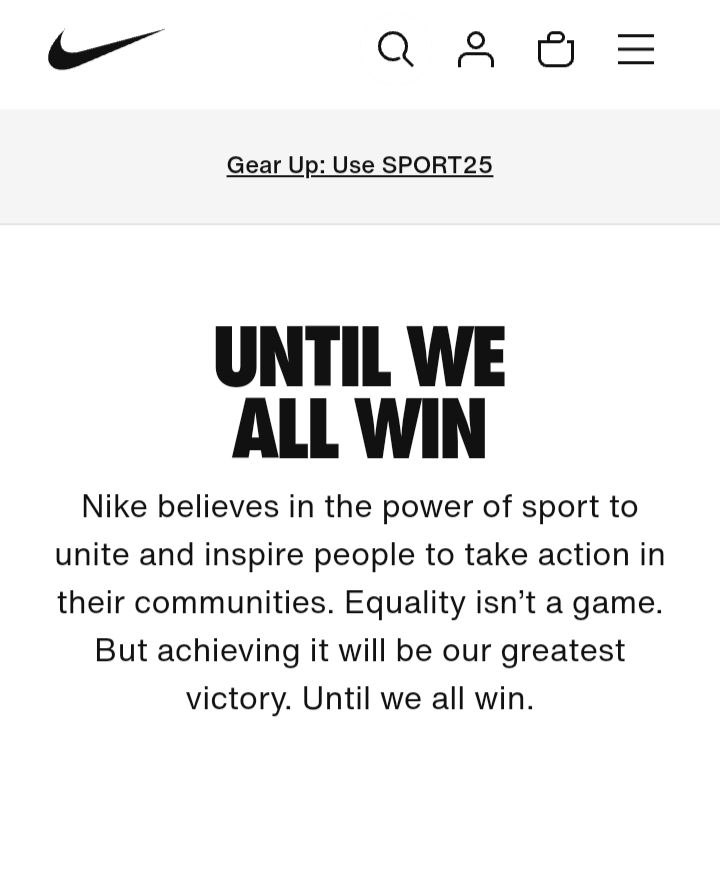
Nike’s Marketing Incoherence/’23 vs ’24

Last year’s corporate slogan:

This year’s corporate slogan (for the Olympics):

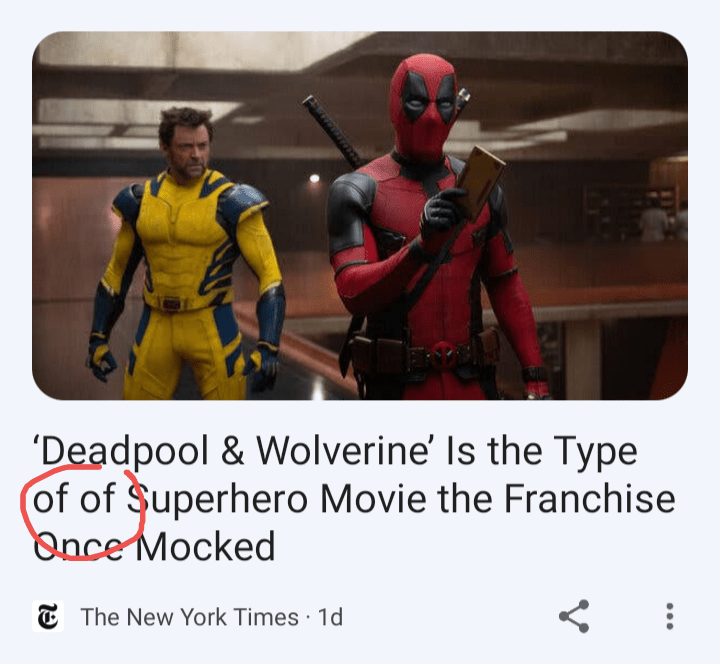
Just something about “winning.” Go back and forth between the generous and the selfish at will. It’s all the same.

This is just how corporate virtues work, though. LinkedIn word salad. Diversity then excellence, teamwork then individualism, sophistication then agrarianism, Dionysus then Apollo…

When Classical Schools Outsource Thinking And Writing To Robots

“We assume professionals use certain resources and abstain from using others. A carpenter doesn’t hide his use of a hammer, neither does a cook hide his use of a can-opener. However, if a homemaker dresses up a bakery cake such that it appears she made it herself, and if she accepts compliments on the cake without qualification, she is guilty of deception. Similarly, if a classical Christian school—an institution that promotes itself as a place where thinking and writing are taught well—decides to outsource their thinking and writing to robots, that school no longer deserves to be taken seriously. Can anyone at your school write? If so, pay them to write your copy. If not, tell parents. I’m sure they’d like to know before signing reenrollment forms.”

-from my latest on The Classical Teaching Institute blog

Bible Class and Bible Study

Most classical Christian schools have never entirely sorted out whether they want Bible classes or theology classes.

“Bible class” has become a bit of a catch-all term, much like “Bible study.” I regularly hear students say they go to a “Bible study” where they are reading some lately published memoir about overcoming trauma. It is understandable they refer to such events as “Bible studies”, though, because even “Bible studies” which feature open Bibles rarely include Bible study. Instead, a brief passage from one of St. Paul’s letters is read—it might take sixty seconds or so—and then students share what they think the passage means for about half an hour. In this way, a study of Galatians, a study of a Lauren Daigle song, and the study of an Ann Voskamp book all basically turn into the same thing.