
At the Minneapolis airport.
Teach me to care and not to care.
At the Minneapolis airport.
I was supposed to be home three days ago, but I’m smack dab in the middle of the Delta meltdown. On Saturday night, my flight from Minneapolis to Boise was delayed from 10pm to 12:30am, then to 2:00am, then to 3:00am, then it was cancelled. I would estimate that a thousand people slept on the airport floor that night–surreal. I was put on standby for a 10am flight to Spokane, but that flight was cancelled, as well. Since Sunday morning, I’ve been at the Radisson Blu in the Mall of America.
I’m scheduled for a 10:30pm flight tonight, but I’m not hopeful. There are three Delta flights from Minneapolis into Spokane today. The first has been delayed three times, the second has been cancelled, and the last one is the one I’m scheduled for. Not an auspicious start to the day.
I’ve never seen corporate incompetence on this level before.
If you’ve read any of the news stories about the meltdown, you know the problem isn’t lack of planes, but lack of staff.
The reason my flight on Saturday was cancelled was because Delta was one flight attendant short of the legal minimum to board. The plane was there, we could all see it, and we all watched two pilots and two flight attendants check in at the gate then head to the lounge to wait. The departure time kept getting delayed in the hope that another flight attendant could be found.
Four days later, this same problem persists. Delta simply can’t find it’s own employees.
I’ve read a few early think pieces on the matter, and it looks like this will cost Delta at least a billion dollars, although it could be substantially higher depending on what fines the Transportation Department imposes. The federal government stuck Southwest with a $140m penalty for a similar disruption in service years ago.
What if grade inflation is actually a pretty serious sin? What if grade inflation is the defrauding of the public–like counterfeiting or pimping, which Dante consigned to the eighth circle of hell?

Amelie, 2002.
I will be giving two lectures at the 2024 CiRCE Conference in Charleston next week. One which questions the accuracy of “the rhetoric stage” as Sayers describes it, the other which argues Philippians 4:8 (“…whatsoever things are pure, whatsoever things are lovely, whatsoever things are of good report”) is an aesthetic theory which is independent of both relativist and objectivist accounts of beauty. The latter lecture will be streaming, so even if you can’t be in Charleston, you can still view the lecture by registering here.
“I would wager that the average classical Christian school is 97% Protestant. Nonetheless, in the miniscule enclave of Catholics, one often finds the most respected student in the school. I don’t mean that all the Catholic students are excellent, and yet I wonder: how many Classical Christian schools have awarded their top honors at the end of the year to a disproportionately high number of Catholics? Quite a few, I suspect.
Catholics are free to argue the reason for this owes to the superiority of their dogma and tradition, but that’s not what I’d chalk it up to, because I would also wager that at pious Catholic schools, Protestant minorities nab a disproportionately high number of honors at the end of the year. Why? Well, a Catholic minority at a largely Protestant school has constant reminders of his otherness, his diplomat status. He feels he is the representative of another world. He knows that when his teachers see him, they think, “There’s that Catholic boy,” and he wants to do his church proud.”

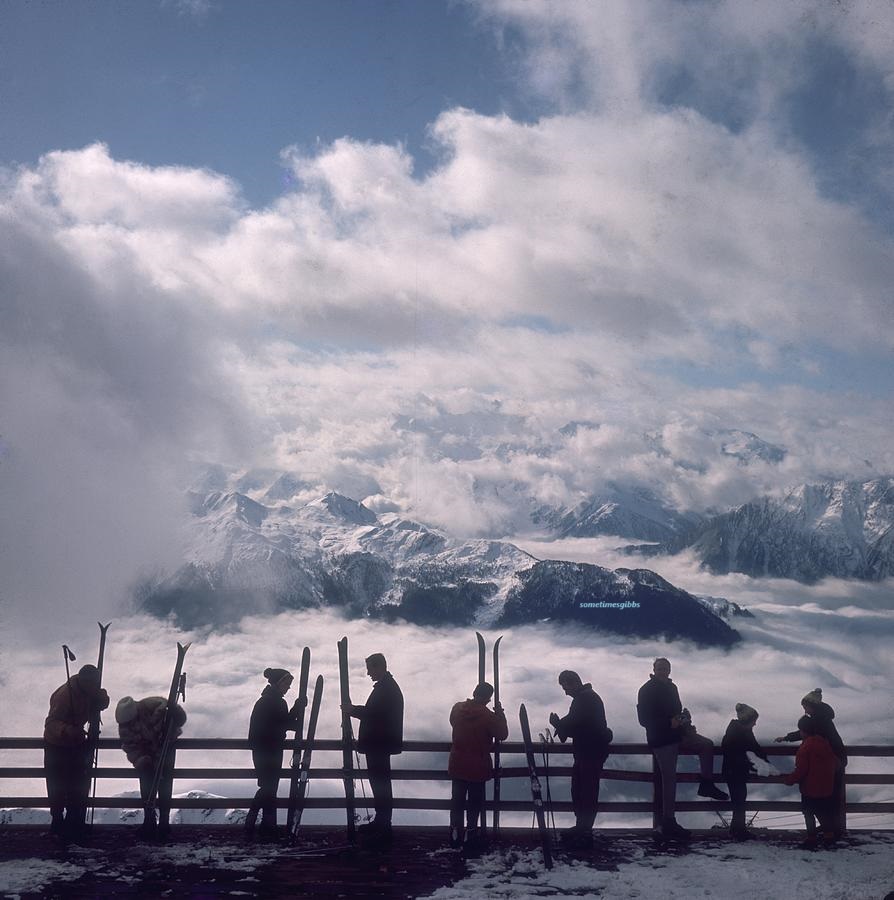
Gibbs in the Badlands.
Is it just me or did Freddie Mercury just not finish writing his part in this song?
Bowie finished his part. This song closes with some of Bowie’s most poignant lyrics. Mercury just couldn’t be troubled. Have a look for yourself.

“In the last year or so, though, I’ve come to an odd realization about the prospect of sending my daughters to college. It might sound like back-peddling at first, but I would contend it’s simply a more accurate way of expressing my concerns. I would be happy to help my daughters go to the biggest, dumbest, most prestigious apostasy factory in the country on two conditions: they were 28 and married.
For years, I primarily attributed the high rate at which Christian kids give up the faith in college to the constant onslaught of attacks on Christianity (and sanity) which have become commonplace on college campuses, both in the classroom and on the quad. While this onslaught cannot be ignored, I’ve lately begun to think apostasy rates have more to do with the age at which young Christians are being made to bear the attacks on their faith. Simply put, the problem is the eighteen-ness of it all.
Obviously, people quit the faith in their late 20s and 30s, as well, but they do so for very different reasons than Christian kids who have just arrived at college. Apostasy in later life often emerges in the wake of some significant sin, especially adultery. For mature Christians, adultery and apostasy are often connected. Adultery is a big decision, though. It entails crossing an unambiguous line and requires a brazen willingness to turn one’s back on a well-established life, even if that life is also incredibly vexing and unsatisfying. Adultery feels momentous, final, portentous, even uncanny.
Quitting the faith at eighteen or nineteen doesn’t feel quite the same. It’s far, far easier. It takes far less.”
-from Apostasy In College on The Classical Teaching Institute blog
NOTE: If you want to keep up with my latest articles and essays, please bookmark The Classical Teaching Institute blog, which is where the majority of my new work will appear.

 There are still faint glimmers of civilization left in this barbaric slaughterhouse that was once known as humanity.